West Coast Tantra
Lifestyle • Culture • Education
Desire Doesn't Always Arrive First
November 12, 2026
post photo preview

Sometimes the secret to a more passionate love life isn't waiting until you're in the mood. It's discovering what helps the mood find you.


It's Tuesday evening.

She's curled up on the sofa, wearing something comfortable and entirely uninterested in being seductive. He's had a long day, dinner is finished, the dishes are done, and the most exciting thing on the evening's agenda is deciding what to watch on Netflix.

Romance is not exactly setting the furniture on fire.

Then he leans over and kisses her. Just a little kiss, familiar and affectionate, but instead of pulling away, he lingers. She smiles against his lips, his hand settles at her waist, and suddenly she's rather more interested in the man beside her than whatever Netflix has to offer.

Another kiss follows, a little longer this time. Somewhere between the sofa cushions and the forgotten television remote, something rather wonderful begins to stir.

Well, hello there. Where did you come from?

Desire has entered the room.

Fashionably late, naturally.


The Myth of Spontaneous Desire

We have a rather romantic idea about how sexual desire is supposed to work. First, you feel an irresistible urge. Then you reach for your lover, passion erupts, clothes become optional, and the neighbours develop a sudden interest in soundproofing.

Lovely, isn't it? And sometimes that's exactly how it happens.

But not always.

Sex researchers distinguish between two broad patterns of desire: spontaneous desire and responsive desire.

Spontaneous desire is that familiar feeling of wanting sexual intimacy before anything particularly erotic has happened. It might appear when your lover walks into the room looking exceptionally attractive, or when a memory, fantasy, or unexpected thought sends a delightful little shiver through your body.

You want them. Right now.

Responsive desire, on the other hand, often develops after something pleasurable, affectionate, or arousing has begun. You might not have been thinking about sex at all, but then comes a kiss, a lingering embrace, or the delightful sensation of being wanted by someone you adore.

Suddenly, you're paying attention.

Both patterns are normal. Many people experience a mixture of the two, and desire can change with stress, health, hormones, life circumstances, and the relationship itself.

Here's the beautiful part: not feeling desire at the beginning doesn't necessarily mean desire won't appear.

Sometimes it simply hasn't been invited yet.


Your Body Might Need a Little Romance First

Imagine walking into a beautiful restaurant. The lighting is warm, music floats softly through the room, and something delicious is cooking in the kitchen. You weren't particularly hungry when you arrived, but then you catch the aroma of freshly baked bread.

Someone brings the menu, and your appetite begins to awaken.

Sexual desire can sometimes follow a similar pattern. Not because hunger and arousal are identical, but because our responses are influenced by context, atmosphere, and what we're experiencing in the moment.

For some people, desire arrives first. For others, emotional connection, affectionate touch, or growing arousal helps desire emerge.

Perhaps your lover needs a little time to unwind from the day. Perhaps she needs to feel emotionally connected before her body becomes interested, or perhaps he needs reassurance that intimacy isn't another obligation waiting at the end of an exhausting afternoon.

Or perhaps both of you simply need to remember how wonderful it feels to touch without immediately deciding where that touch must lead.

There's something profoundly erotic about being allowed to enjoy the moment without expectations, without performance, and without wondering whether you're doing enough. Just two people discovering what feels good together.


The Trouble With Waiting for Lightning

Remember those early days? The stolen kisses, the anticipation, the ridiculous excitement of receiving a message from someone you'd only seen three hours earlier.

Your body seemed to have its own agenda.

An outrageously enthusiastic agenda, at that.

But as relationships mature, life becomes fuller. There are jobs, responsibilities, bills, appointments, household chores, and occasionally the deeply unsexy discovery that somebody has forgotten to buy toilet paper. Again.

Somewhere along the way, couples may begin waiting for spontaneous desire to announce itself. They love each other, they're attracted to each other, but neither feels particularly inspired to make the first move.

So nothing happens.

Not necessarily because the love has vanished or the attraction has faded. Sometimes, they've simply forgotten that desire can be something they nurture together rather than something they passively await.


You don't have to manufacture passion. But you can create space for it to grow.


And that changes the conversation entirely.


The Art of Inviting Desire

So how do you invite desire without turning intimacy into another item on the evening's to-do list?

You begin with curiosity.

Perhaps you sit close enough for your legs to touch, or kiss your partner slowly, not because you're trying to initiate sex, but because you genuinely enjoy kissing them. Perhaps you offer a shoulder massage, share a warm bath, or spend twenty minutes tangled together beneath a blanket.

Put the phones away. Let the world disappear for a little while, and most importantly, let go of the destination.

A kiss doesn't have to become anything more than a kiss. A massage doesn't have to become foreplay, and an invitation to intimacy is never an obligation to continue.

Sometimes desire awakens. Sometimes it doesn't.

Both outcomes are perfectly fine.

The purpose isn't to persuade a reluctant body into participation. It's to create the kind of warmth, safety, and pleasure in which authentic desire has an opportunity to emerge.

When both partners feel free to say yes, no, or not tonight, darling, something beautiful becomes possible.

Exploration without pressure.

And that's a much more inviting atmosphere for pleasure.


The Delicious Difference Between Wanting and Being Willing

There's another little distinction worth exploring. You might not actively crave intimacy at a particular moment, yet still feel genuinely open to enjoying some affectionate closeness.


Something like:

"I'm not especially turned on right now, but I'd love to cuddle and see how I feel."

That's very different from:

"I don't want to, but I suppose I should."


One is an invitation. The other is an obligation, and obligation is a notoriously poor aphrodisiac.


Healthy responsive desire begins with willingness, comfort, and genuine choice. Not duty, guilt, or the fear of disappointing someone you love.

Your body is allowed to take its time, and it's also allowed to change its mind. There's no prize for pushing past a boundary, no romantic reward for ignoring your own discomfort.

The real magic is discovering that you can explore pleasure together while trusting that either person can stop whenever they wish.


When Desire Finally Finds You

Now, imagine that Tuesday evening again.

The television is still playing, but neither of you has paid attention to it for twenty minutes. Perhaps the kissing has grown warmer, or perhaps you're simply curled together, enjoying the sensation of being close.

There's laughter, a whispered compliment, a familiar hand resting somewhere wonderfully comforting. And perhaps, just perhaps, something shifts.

The ordinary evening begins to feel extraordinary.

Not because either of you planned a spectacular romantic performance, or because you forced yourselves into a particular mood. But because you made room for connection, gave yourselves permission to explore, and desire, that unpredictable little creature, decided to join you.

Or perhaps it didn't.

Perhaps you fell asleep in each other's arms instead, and that's beautiful, too. Because intimacy is not a failed attempt at sex. It's something worth celebrating in its own right.


Your Invitation: Follow the Warmth

Sometime this week, set aside a little time together. No elaborate plans, no expectations, and no predetermined outcome.

Make your surroundings inviting. Dim the lights, put on some music, and share a kiss that lasts a little longer than usual. Ask each other what would feel lovely, then follow whatever warmth appears.

Maybe it leads to a wonderfully passionate evening. Maybe it leads to a long, affectionate conversation, or perhaps the best cuddle you've had in months.

And if nothing feels inviting, honour that too.

The beauty of this approach isn't that every intimate moment ends in fireworks. It's that you stop measuring connection by whether fireworks appear.

Because sometimes desire doesn't arrive first. Sometimes tenderness opens the door, pleasure follows, and that familiar person beside you suddenly becomes the most irresistible creature in the world.

Well, hello there, darling.

I've been hoping you'd show up. 🌹

community logo
Join the West Coast Tantra Community
To read more articles like this, sign up and join my community today
0
What else you may like…
Videos
Posts
Articles
Welcome to the West Coast Tantra community!
00:01:23
Question for Men

Which matters more to you?

Teehee Tuesdays? who has a joke for me 🤩

Free Intimacy Checklist for Couples

Start your sensual journey today! Download my free Intimacy Checklist

Most couples never learn how to talk about what they truly desire. This guide creates a safe space to explore together ~ without judgment, without pressure, just honest curiosity about what lights you both up

How to Use This Guide:

This isn't a test or a to-do list. It's an invitation to discover what excites you, individually and together. You'll find three categories:

🌱 Foundation – Intimacy practices that feel comfortable and accessible

🔥 Curious – Experiences you're interested in exploring

✨ Edge – Things that intrigue you but might feel vulnerable or new

https://www.westcoasttantra.com/intimacy-checklist

post photo preview
post photo preview
You Don't Need a New Lover.
You Need a New Adventure.

Sometimes the secret to falling in love all over again isn't finding someone new. It's discovering someone new in the person who's been beside you all along.

You know how she takes her coffee. You know which side of the bed he sleeps on. You know the face she makes when she's annoyed, the way he laughs at his own jokes, and exactly what you'll both order at your favourite restaurant.

Love has become wonderfully familiar. Comfortable. Predictable.

Perhaps just a little too predictable.

Then one afternoon, something happens. You watch your partner do something you've never seen them do before. Something bold, unexpected, maybe even a little daring.

And suddenly, there's a flutter in your stomach.

Well, hello there. Where have you been hiding?

That familiar person you've loved for years? They're looking rather irresistible.

Maybe It's Not Someone New You're Craving

Let's talk about something we don't always like admitting.

Sometimes, even in loving relationships, we crave something different. A new spark. A little mystery. That delicious sensation of butterflies dancing somewhere below our ribs.

For some, that longing becomes an attraction to someone outside the relationship. After all, there's something intoxicating about unfamiliar territory. Someone whose stories you haven't heard, whose kisses you haven't memorized, whose secrets remain deliciously undiscovered.

But here's an intriguing thought.

What if the excitement you're craving isn't really about a different person? What if it's about feeling something different?

Feeling adventurous. Desired. Alive.

What if the person sleeping beside you could awaken those feelings all over again? Not by changing who they are, but by stepping into an entirely new experience with you.

Love on Two Wheels

Meet Selene and Troy.

They've discovered something rather wonderful about keeping their relationship alive. They ride motorcycles together, heading out several times a week to explore winding coastal highways, forested roads, and whatever unexpected adventure awaits around the next bend.

And riding together is something of an intimate dance.

Troy approaches a sweeping curve, shifts his weight and leans into the turn. Behind him, Selene follows, matching his line, speed and rhythm. They're riding separate motorcycles, but moving together in an unspoken conversation.

Traffic thickens. A truck blocks their view. Road conditions change. Each watches out for the other, communicating through movement, positioning and an almost instinctive awareness.

And when they stop?

"Beautiful corner back there."

"Did you see how I got around that truck?"

"Oh, I saw. Very nicely done."

There's admiration in those moments, a little pride, and perhaps the occasional appreciative glance at someone looking exceptionally good in motorcycle leathers.

Because something interesting happens when you watch the person you love demonstrate skill, courage and confidence. You see them differently.

Not as the person who forgot to put the laundry in the dryer, but as someone capable, adventurous and wonderfully alive.

And competence, darling, can be incredibly sexy.

A Birthday Dinner With a Difference

Of course, not every adventure requires a motorcycle, a mountain or a healthy appreciation for protective leather.

Sometimes all you need is a blindfold, a little trust, and a lover with a wicked sense of surprise.

For Troy's birthday, Selene had something special planned. She wouldn't tell him where they were going. Instead, she blindfolded him, settled him into the car, and whisked him away to a mysterious destination.

The surprise? A restaurant called The Dark Table.

And the name wasn't being metaphorical.

At The Dark Table, guests dine in complete darkness. No candles, no dim lighting, not even the faint glow of a phone. Blind or visually impaired staff guide diners through an experience in which sight is removed from the equation entirely.

Imagine sitting across from your lover and not being able to see her face. You can hear her voice, sense her presence, perhaps reach across the table to find her hand, but you can't exchange those familiar little glances.

Even the simplest things become discoveries.

Where's your wineglass? What exactly is on your fork? And why does finding your mouth suddenly require the concentration of a neurosurgeon?

There's laughter, naturally. Perhaps a little fumbling, and a great deal of appreciation for the skill and confidence of the people guiding you through the darkness.

But something else happens, too.

Without sight, your other senses take centre stage. The aroma of your meal, the texture of food against your tongue, the sound of your partner laughing somewhere across the table.

And that familiar voice?

Suddenly, it might be the most alluring sound in the room.

For Troy and Selene, the evening was an adventure in trust, sensation and shared discovery. They weren't simply going out for dinner. They were experiencing something entirely unfamiliar together.

And that's the magic.

Sometimes, seeing your lover in a new light means turning the lights off altogether.

The Science of Seeing Your Lover Differently

Psychologists have a concept that helps explain why experiences like these can be so powerful: self-expansion.

The idea is that human beings are naturally drawn toward growth, discovery and new experiences. When couples explore unfamiliar territory together, they have opportunities to grow not only as individuals but within their relationship.

Research suggests that sharing novel, engaging activities can increase feelings of closeness and relationship satisfaction.

And it makes intuitive sense. When was the last time you saw your partner genuinely surprised, concentrating intensely on a new skill, or laughing helplessly at something neither of you expected?

Maybe you've discovered her adventurous side. His surprising sensitivity. Her hidden courage. His ability to remain wonderfully calm when everything goes sideways.

These moments reveal dimensions of someone familiar.

You thought you knew everything about each other.

Turns out, there are still a few chapters you haven't read.

Adventure Doesn't Require a Parachute

Now, before you start shopping for skydiving lessons and updating your wills, let's clarify something.

Adventure doesn't have to mean danger. It simply means stepping outside the familiar, and the wonderful thing is that different couples find excitement in different places.

The curious romantics: Try a restaurant where neither of you knows what's on the menu. Visit an art opening, explore an unfamiliar neighbourhood, or dress up for a show you'd never normally attend.

The playful explorers: Take dancing lessons. Learn to cook an exotic dish together. Try kayaking, pottery, or something delightfully ridiculous that guarantees a few laughs.

The outdoor adventurers: Discover a new hiking trail. Spend a night beneath the stars. Take a spontaneous road trip or explore a coastline you've never visited.

The beautiful lunatics: White-water rafting. Zip-lining. Rock climbing. Skydiving.

We'll be cheering you on from somewhere safely attached to the ground.

The point isn't how daring the activity is. It's whether it feels fresh, engaging and exciting to both of you.

A shared adventure should bring you closer, not leave one partner quietly plotting revenge.

And sometimes the bravest adventure is simply trying something you feel a little shy about, like taking a dance class when you possess all the natural grace of a startled refrigerator.

Your partner might fall in love with you just for trying.

And Then There's What Happens Afterwards...

Here's where things can get delicious.

You've spent the afternoon doing something new together. Perhaps you've climbed a mountain, danced terribly, navigated a winding road, or shared an extraordinary dinner without seeing a single bite.

You've laughed, encouraged each other and experienced something neither of you quite expected.

And now you're home.

The helmets are off. The shoes are by the door. You're pouring a glass of wine when your partner catches your eye.

There's a smile, a lingering glance, perhaps an affectionate hand finding its way around the waist.

Nothing dramatic has changed, and yet something feels different. You've spent the day seeing one another through fresh eyes.

The confidence. The courage. The laughter. The unexpected tenderness.

Perhaps you've remembered something that everyday routines sometimes hide.

This person still has the power to surprise me.

And suddenly, the evening has possibilities.

The Art of Falling in Love With Someone You Already Love

Long-term love is not supposed to feel like a first date forever. Thank goodness.

There's a special beauty in knowing someone deeply, in feeling safe enough to be ordinary together. To grow older, build a home, and share the quiet, unremarkable moments that make a life.

But safety and excitement don't have to be enemies. Familiarity and discovery can coexist, and the comfort of knowing someone doesn't mean you've reached the end of everything there is to discover.

You can know someone's heart intimately and still be surprised by what makes it race.

You can love the person they've always been while discovering the person they're still becoming.

And perhaps that's one of the most beautiful gifts we can offer each other. Not the promise that we'll never change, but the invitation to keep discovering who we are, together.

Your Invitation

Sometime this month, do one thing together that neither of you has done before.

It doesn't need to be expensive, elaborate or particularly daring. Just something different, something that lets you step outside the ordinary and discover a little more about each other.

And afterward, when the adventure is over, find a quiet moment together. Look into your lover's eyes and ask:

"What did you see in me today that you don't normally get to see?"

Then listen. You might be surprised by the answer.

And who knows? You might just fall in love all over again.

Because there are still versions of the person beside you that you haven't met yet.

And isn't that a beautiful adventure? 🌹

Read full Article
post photo preview
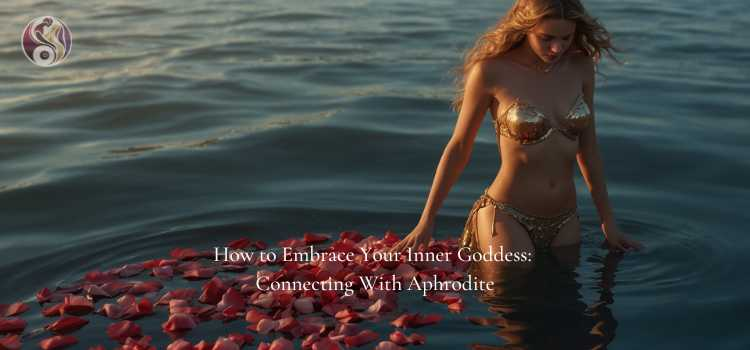
How to Embrace Your Inner Goddess:
Connecting With Aphrodite

There's a version of the Aphrodite myth I keep coming back to. She doesn't earn her beauty. She doesn't work for it, prove it, or perform it for anyone watching. She simply rises — out of sea foam, fully formed, already whole. No before-and-after. No striving. Just arrival.

I think about how differently most of us were taught to arrive.

Most of us learned that a woman becomes worthy of pleasure — of being looked at, touched, wanted — only after enough has been fixed, lost, toned, or perfected. Pleasure gets filed away as a reward for later, for smaller, for someday. We wait for permission that never quite arrives, because we're the ones meant to give it.

Aphrodite never waited. And I don't think embracing her has anything to do with becoming more beautiful. It has to do with remembering that you already are the kind of being pleasure belongs to — not once you've changed something, but right now, in the body you're standing in today.

This isn't about the mirror

When people hear "inner goddess," they often picture the aesthetic — the flowing dress, the candlelight, the styled version of confidence. That's fine as far as it goes, but it's not where this actually lives. Aphrodite isn't a look. She's a relationship — to your own body, your own wanting, your own right to feel good without needing to justify it.

You can practice this in the plainest moments. The way water moves over your skin in the shower, if you let yourself actually feel it instead of rushing through it. The weight of a soft blanket. The taste of something you chose because you wanted it, not because it was virtuous. None of this requires a ritual or a special occasion. It requires attention — the decision to stop treating your own sensation as background noise.

Worship, reframed

The ancient Greeks didn't worship Aphrodite by admiring her from a distance. They brought her offerings — flowers, oil, incense, wine, honey. Small, sensory, physical gifts. What strikes me about that practice is how ordinary the offerings were. Nothing extravagant. Just things that smelled good, felt good, tasted good, given freely.

You can offer yourself the same kind of worship. Not self-improvement — self-offering. Light something because the scent moves you. Put on the fabric that feels good against your skin, even if no one else will ever touch it. Eat the fruit slowly enough to notice the juice. These aren't indulgences you have to earn. They're how you practice believing you're allowed to feel good in your own body, for no reason other than that you're in it.

Wanting without apology

Here's the part that tends to catch people off guard: Aphrodite wanted things, openly, and never once apologized for it. She desired, she pursued, she was moved by beauty and pleasure and connection, and none of that made her less — it made her Aphrodite. Somewhere along the way, many of us learned the opposite lesson: that wanting too much, too visibly, makes us difficult, or vain, or too much altogether.

You're allowed to want this. Not want it quietly, apologetically, in the smallest possible portion — want it the way Aphrodite did. Want to be touched. Want to feel beautiful in your own eyes before anyone else's. Want pleasure that isn't in service of someone else's experience of you.

Where to start

You don't need a myth to grant you permission — you already have the body. But if the story helps, let it be this: Aphrodite rose already whole, already worthy, already hers. Not because she'd done the work to deserve it, but because that was simply what was true.

Start smaller than you think you need to. Choose one sense today and actually inhabit it — really taste the meal, really feel the warmth of the water, really notice how the light falls across your own skin. That's the whole practice. Not becoming a goddess. Remembering you already showed up as one.

Read full Article
post photo preview
Unveiling Her Sensual Secrets:
A Woman's Guide to Her Own Erogenous Landscape

There's a strange gap that lives in a lot of women's lives, and it rarely gets talked about out loud: you can know exactly what makes your partner sigh, arch, catch their breath — and still be a stranger to your own body's map.

It's not your fault. Most of us were taught to be attentive to other people's pleasure long before anyone taught us to be curious about our own. So we get skilled — sometimes very skilled — at reading someone else's responses, while our own remain half-explored territory we visit only when someone else leads the way.

This is an invitation to change that. Not with a partner, not with a goal, not with a checklist — just you, some unhurried time, and a willingness to find out what you actually feel.

Beyond the Obvious Places

When most of us think about erogenous zones, we think about the handful everyone already knows. But your body is far more generous than that. The nape of your neck. The inside of your wrist. The curve where your ribs meet your waist. The backs of your knees. Your scalp, when someone — or you — takes the time to really touch it. The small of your back. Even your own breath moving through you can register as sensation if you slow down enough to notice.

None of this is exotic or secret in the mystical sense. It's just under-visited. Most of us move through our days touching ourselves only for function — washing, dressing, applying lotion on autopilot while thinking about tomorrow's to-do list. The body registers all of that as maintenance, not as attention. And attention is the thing that turns a patch of skin from background noise into something alive.

Why This Belongs to You First

Here's the part that's easy to skip past: knowing your own erogenous landscape isn't just about deeper intimacy with your partner, though it usually does lead there. It's about no longer needing someone else to translate your body back to you.

A lot of women arrive at intimacy already fluent in what their partner likes and quietly unsure of their own responses — waiting to be shown, waiting to be asked, waiting for someone else to discover what should have been theirs to know all along. That waiting isn't a character flaw. It's just what happens when curiosity about your own pleasure was never modeled or invited. It can be invited now, starting today, by you, for you.

A Simple Practice

You don't need candles or a ritual, though you're welcome to them if they help you settle. What you need is fifteen unhurried minutes and permission to be curious rather than efficient.

Start seated or lying down, somewhere private enough that no part of you is holding back. Close your eyes if that helps you drop into sensation rather than watching yourself from the outside. Begin anywhere — your collarbone, your inner arm, the base of your throat — and simply notice. Not "does this feel good," which is a question with a yes-or-no answer, but "what does this actually feel like right now." Warm? Ticklish? Numb? Alive? There's no wrong answer, and there's no destination you're trying to reach.

Move slowly, without a plan, letting your attention decide where it wants to linger rather than following a script. Some places will surprise you. Others will feel like nothing at all today, and that's information too — bodies aren't static, and what registers strongly one day might be quiet the next.

The point isn't arousal, necessarily, though it may show up. The point is familiarity. You're building a relationship with your own responses, the same patient way you'd get to know a new partner — through attention, not assumption.

If your mind wanders — and it will, because we're not practiced at this kind of unhurried attention — just notice that too, and come back to the skin under your fingers. There's no failing at this. The wandering is part of the practice, not a break from it. Some women find it helpful to do this after a warm shower, when the body is already a little more awake to sensation. Others prefer total stillness, first thing in the morning before the day's noise arrives. There's no correct time. There's only the time you actually give it.

You might notice, too, that certain places carry more than physical sensation — a held breath near your collarbone, an unexpected softness behind your knees, a place that makes you want to laugh or cry for no clear reason. Bodies hold more than pleasure; they hold memory and emotion in the same tissue. If something surfaces that feels bigger than curiosity, let it. You don't have to explain it or fix it. You're just allowed to notice it, the same way you'd notice anything else.

Bringing It Forward

Once you've spent time here on your own, something shifts. You stop needing someone else to discover you. You can guide, ask for what you already know you want, and receive touch as confirmation of something you've already learned rather than a total unknown. That's a different kind of intimacy — one built on knowing yourself first, then choosing to share that knowledge rather than waiting to be handed it.

Your body has never actually kept its secrets from you. It's just been waiting for you to ask!

Read full Article
Available on mobile and TV devices
google store google store app store app store
google store google store app tv store app tv store amazon store amazon store roku store roku store
Powered by Locals